
Buying an Ex-Display Shed or Summer House: A Practical Guide

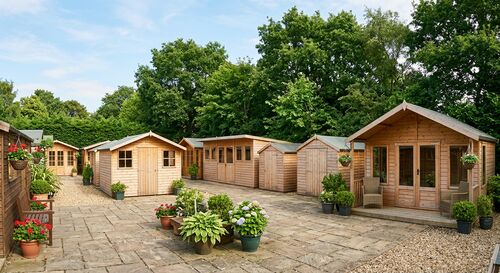
Garden buildings are a big outlay new, so the ex-display and clearance market is one of the better ways to add storage or a garden room without paying full price. A display building has stood outside, so read the listing for any weathering, and remember most need dismantling and re-erecting on a level base. Get those two things right, the condition and the rebuild, and an ex-display shed is a genuine bargain. Start with the sheds and summerhouses listings and match the building to the job before you look at price.
Timber, metal or plastic
The frame material decides how the building looks, how long it lasts and how much upkeep it needs.
- Timber. The traditional choice and still the most popular. Warm to look at, easy to fix shelves and hooks to, and simple to repair a board if one splits. It needs treating every year or two with a preservative, and cheaper overlap panels are less sturdy than tongue-and-groove shiplap. Most ex-display summer houses and garden offices are timber.
- Metal. Usually galvanised or powder-coated steel. Low maintenance, secure and fireproof, which makes it a good pure-storage choice for mowers, fuel and tools. The downsides are condensation inside and the fact you cannot easily screw into the walls. Check an ex-display metal shed for dents and any rust starting at scratches.
- Plastic. Moulded polypropylene or similar. No rot, no rust, no painting, and it shrugs off weather. Good for small to mid-size storage. It looks less smart than timber and you are limited on fixing things to the walls. A display plastic shed can go slightly chalky on the sunward side, which is cosmetic.
Sizes and what they are for
Work out the use first, then the size, not the other way round. It is easy to buy the building you like the look of and find it does not fit what you need.
- Small (up to around 6x4). Bikes, a mower, tools, garden bits. Fine for basic storage in a modest garden.
- Medium (6x8 to 8x10). Room for storage plus a workbench, or a potting area. The everyday all-rounder.
- Large (10x8 and up). A workshop, a garden office, or storage with proper space to move around. This is the range where a summer house or insulated cabin starts to make sense.
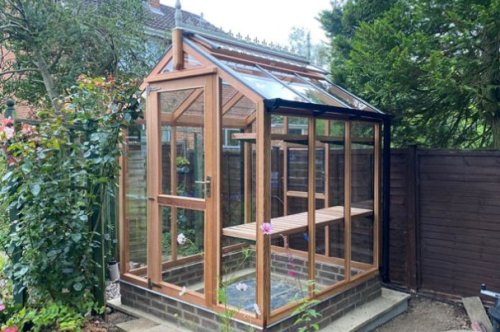
If you want a garden office or a room to sit in, look at summer houses and cabins rather than a plain shed, since they come with better windows, double doors and thicker cladding. For a working shed, prioritise headroom and a solid floor over looks. If you are also thinking about growing space, it is worth comparing against a greenhouse, which does a different job for a similar outlay.
What condition to expect
An ex-display building has been assembled and left standing, often outdoors, sometimes for a full season. That is not a problem if you know what you are looking at.
- Weathering. Timber may have greyed or need a fresh coat of treatment. That is normal and easily sorted with a tin of preserver.
- Handling marks. Scuffs round the door and corners from being walked past. Cosmetic.
- Felt and fixings. Roofing felt on a display shed may be tired. Budget for a new roll, it is cheap and it is the part that keeps the rest dry.
- Warping or rot. This is the one to check for. Press round the base rails and any low panels. A building that has stood on wet ground can have soft spots at the bottom. Ask the seller directly.
Because the marketplace connects you to the seller, ask for photos of the base, the roof and the inside corners before you travel. Those are the areas that tell you the real condition.
Base preparation
A shed is only as good as what it sits on. This is the step people skip, and it is the one that ruins buildings. The base must be level, firm and free-draining. A building on an uneven base twists, the doors stop shutting and the panels pull apart.
Your options, roughly cheapest to dearest:
- Paving slabs on a bed of sharp sand. Solid and common for small to medium sheds.
- A plastic grid system filled with gravel. Quick to lay, drains well, good for lighter buildings.
- A concrete pad. The best for large sheds, workshops and garden offices, and worth the effort if the building is staying put for years.
Get the base down and cured before your collection date, so you can rebuild straight onto it. Make it slightly bigger than the footprint so rain does not drip off the roof onto the timber edges.
Dismantling and rebuilding
Nearly every ex-display shed comes to you in panels, because it has to be taken apart to move. This is manageable but plan for it.
- Label as you go. If you are dismantling it yourself, number the panels and bag the fixings. It saves a lot of head-scratching at the other end.
- Get help and a van. Panels are heavy and awkward, and a large summer house is a two or three person job. Check the seller can help load, and measure your access at home.
- Rebuild dry. Pick a dry day. Timber panels are easier to line up when they are not swollen with rain, and you want the felt going on dry.
- Fresh fixings and treatment. Have new screws and a tin of preservative ready. Treat the timber once it is up, especially any cut ends.
Done properly, an ex-display shed or summer house gives you the same building as new for a good deal less. Read the listing, check the base and the corners, prepare your ground, and plan the lift. Browse the current sheds and summerhouses listings, or step back to the wider garden section to compare against other buildings before you decide.