
How to Check a Furniture Outlet Before You Buy
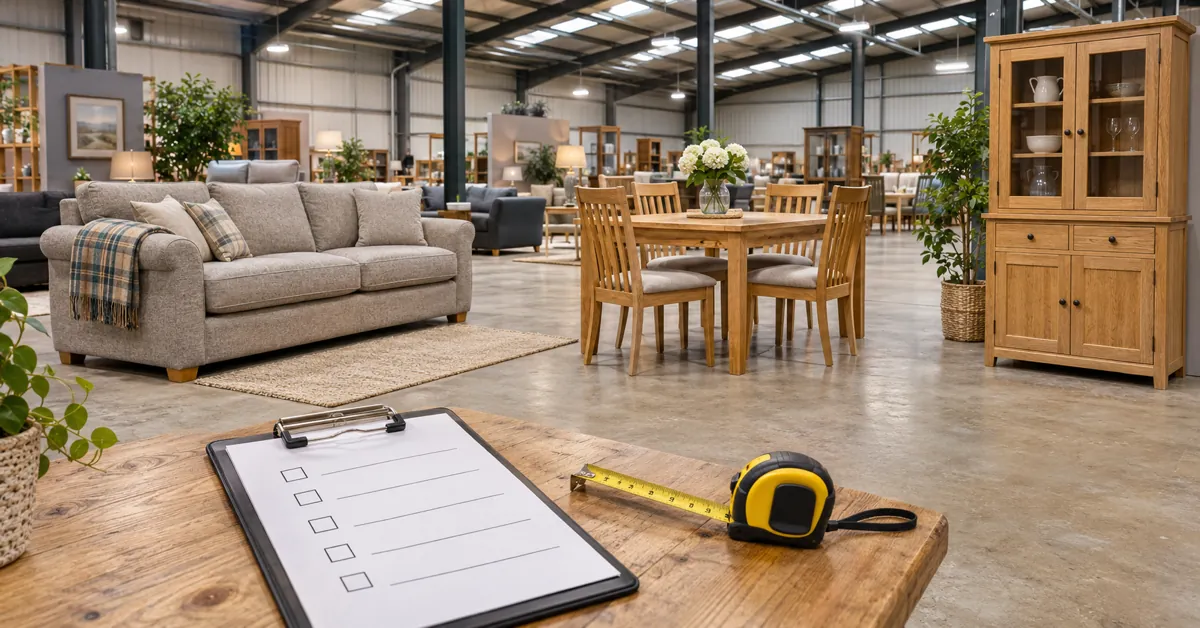
“Furniture outlet near me” is a useful search, but it isn’t a safety check. An outlet can be a genuine bargain, a clearance warehouse, a retailer selling returns, a business with a showroom, or simply a place with a very loud sign. I’m not naming any outlet here. The point is to work out who you’re buying from and what happens if the sofa arrives looking nothing like the photograph.
I’d do most of the checking before getting in the car. Furniture is too bulky for a casual “well, we’re here now” purchase. You need the seller, the condition, the measurements, the payment terms and the delivery plan. Otherwise the petrol is the cheapest part of a very long afternoon.
Find out who is actually selling
Start with the website, social page or marketplace listing. Look for the legal business name, trading address, phone number, email address and returns information. A shop name may not be the same as the company name. If the page only gives a mobile number and a first name, I’d ask for the full trading details before travelling or paying a deposit.
For a limited company or limited liability partnership, search the name on Companies House. The register can show the registered name, number, address, status, incorporation date, filing history and officers. That’s helpful, but Companies House itself says it doesn’t check the accuracy of the information filed. A company record is one check, not a guarantee that the goods are good or the seller is wonderful.
Compare the address on the website with the address on the register and the address you’ve been given for collection. They may differ for perfectly sensible reasons, but ask. Check that the business name on the invoice and card machine matches the seller you think you’re dealing with. A different name at the final payment stage is not the sort of surprise I enjoy.
Reviews are clues, not a verdict
Search the business name and read reviews from several places. Don’t only read the stars. Read the two-star and three-star reviews for patterns around delivery, deposits, missing parts, damage and refunds. One furious review may be noise. Ten people describing the same late delivery is information.
Look at dates. A review from years ago may describe a different owner, premises or delivery firm. Watch for a sudden flood of very short reviews that all sound alike, and for replies that dodge the actual problem. I’m more interested in whether the business gives a specific, calm response than whether every customer says it’s “amazing”. Furniture reviews are often really delivery reviews in disguise.
Ask the outlet for references if you’re buying a large order or paying a substantial deposit. You don’t have to accept a list supplied by the seller as independent proof, but you can ask why they’re confident enough to offer it. Keep your own notes and screenshots before the page changes.
Check the wording on the invoice too. Is the seller describing the item as new, returned, ex-display, second-hand, graded or sold with a cosmetic mark? Those words affect what you should expect from the furniture and what you can sensibly challenge later. If the website says one thing and the invoice says another, stop and ask for a corrected document before paying.
If the outlet is a sole trader rather than a limited company, Companies House won’t give you the same company record. That isn’t automatically a warning sign. It just means you need the trader’s name, address, written terms and a reliable way to contact them. A friendly showroom and a limited company number are both useful clues, not substitutes for checking the actual deal.
Don’t hand over a deposit on a promise
Before paying, get the item description, condition, measurements, price, delivery charge, delivery window and deposit terms in writing. For a display sofa, write down the fire-safety label status and every mark you’ve accepted. For a cabinet, list shelves, handles, keys and fixings. “As seen” is not a full inventory.
Ask what happens if the outlet can’t deliver, the item is damaged in transit or a promised part is missing. Find out whether the deposit is refundable, transferable or simply lost if you change your mind. Don’t assume a verbal promise made beside a sofa will appear on the receipt later.
Citizens Advice says not to pay everything up front for home-improvement work and says staged payments can help keep problems from running away with the project. Furniture isn’t identical to building work, but the principle is sensible: keep enough leverage to deal with a problem, and don’t let urgency do your thinking.
Card protection is worth understanding
If a single item costs more than £100 and no more than £30,000, paying by credit card can bring Section 75 protection in the right circumstances. Citizens Advice says the protection can apply even if only part of the item’s price, such as a deposit, was paid by credit card. The card provider can be jointly liable with the trader for a breach of contract.
There are important limits. Citizens Advice says you can’t usually use Section 75 if you didn’t buy directly from the trader, such as through a marketplace. Paying by debit card may involve chargeback instead, but that is a different process. Keep the invoice, card receipt, photographs, messages and delivery notes. If something goes wrong, contact the seller and your card provider promptly and explain which route you’re asking about.
Don’t put a large furniture purchase through a payment wallet assuming the same protection automatically follows. Ask the card provider before paying if the arrangement is complicated. A five-minute question is better than discovering the payment chain after a delivery has gone missing.
Delivery needs more detail than “nationwide”
Ask who delivers, whether the delivery is one person or two, which rooms they’ll carry to, and what happens if the furniture doesn’t fit. Check stairs, narrow doors, tight corners, parking and floor protection. For a sofa, measure the diagonal and the packaging, not only the room wall.
Ask if delivery includes unpacking and removing packaging. If it doesn’t fit, ask what the failed-delivery charge is. Don’t let a delivery team remove the packaging before you’ve inspected the item if the seller’s terms say you need to report damage straight away.
On arrival, photograph the packaging before opening it. Photograph the furniture from every side, including the underside if possible. Note damage on the delivery paperwork and contact the seller in writing the same day. Keep the packaging until the seller tells you it can go. The glamorous bit of buying furniture is choosing the colour. The useful bit is having evidence.
Check the furniture, not the styling
Outlet photographs are often taken in flattering light with cushions arranged like a small interior-design miracle. Look past that. Sit on sofas and chairs. Check wobble, frame noises, cushion fillings, zips, recliner mechanisms and feet. Look behind the back cushions and under the base.
For wooden furniture, inspect joints, drawer runners, hinges, veneer edges and the back. Open every drawer. Check that shelves are present and that the doors close squarely. For mattresses and upholstered items, ask about hygiene and the fire-safety label. If the label is missing or the history is unclear, I wouldn’t buy it just because the price is tempting.
Measure your own space twice. Include skirting, radiators, sockets and the path from the front door. If the outlet says a piece is “standard size”, that doesn’t mean it will turn through your hallway.
Before you travel, make the call
- Ask if the exact item is still there and request a current photograph.
- Confirm the full price, deposit, delivery charge and collection option.
- Ask who the seller is and what name will appear on the invoice.
- Check the exact measurements, condition and included parts.
- Ask if you can inspect, sit on or open the item before paying.
- Confirm the returns or fault process in writing.
- Check parking, opening hours and whether the item can actually be taken away that day.
Furniture outlet reviews can help you make a shortlist, but they can’t replace a proper seller check. I’d rather make one slightly awkward phone call than drive an hour to find the sofa has already gone, the “deposit” is non-refundable and the delivery charge was never included. A good outlet should be able to answer ordinary questions without making you feel difficult for asking them.