
Where to Buy a Kitchen in the UK
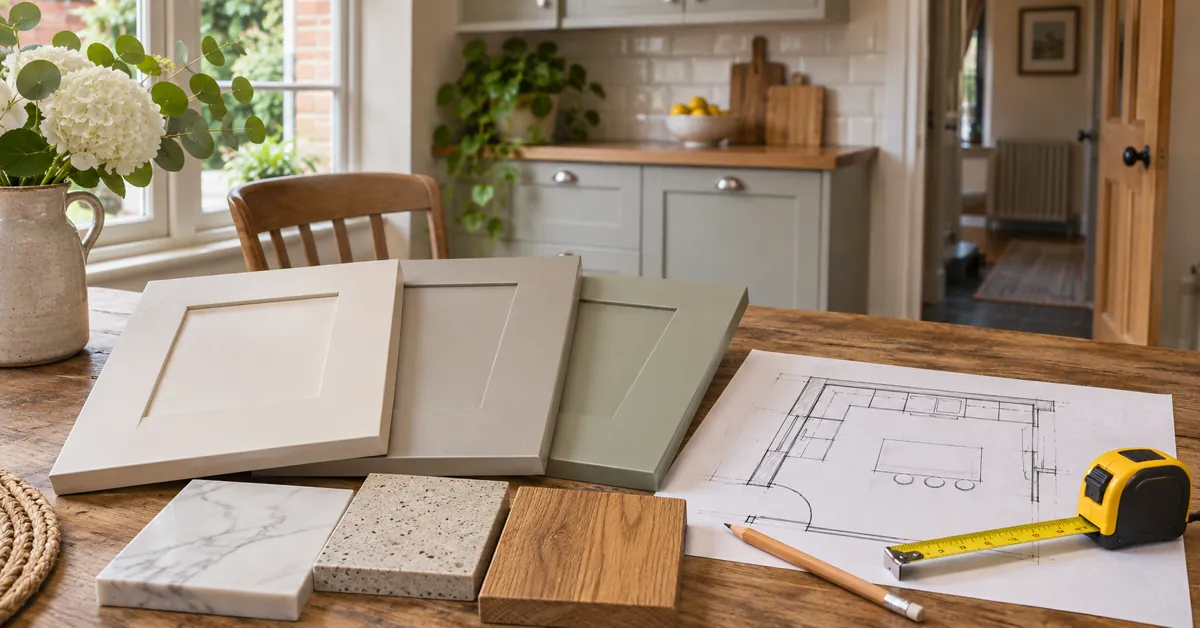
What’s the best place to buy a kitchen in the UK? I’m going to be awkward and say there isn’t one. The best route depends on how much measuring, designing, fitting and chasing you want to do yourself. The cheapest-looking route can become the most expensive once delivery, alterations and installation join the party.
I’d choose the route first, then compare kitchens inside it. That stops a glossy door sample making the whole decision for you.
Big-box DIY is handy, if you’re organised
A big DIY retailer suits someone who wants accessible showrooms, standard cabinet sizes, online planning tools and the option to buy pieces as needed. It can be useful for a straightforward room where you’re happy to coordinate the fitter, worktops, appliances and delivery.
The catch is that you’re often the project manager. Check what is included in the design, what is delivered separately, how damaged parts are replaced and who measures the room. A kitchen can be cheap at cabinet level and rather less cheap once panels, plinths, handles, worktops and fitting appear.
Trade suppliers suit a good fitter
Trade routes can work well when you already have a builder or kitchen fitter who knows the system. Howdens says it sells only to trade professionals and that a trade professional is needed to establish the kitchen cost. Its quote is not the final installed price, because transport, labour or commission may sit with the builder.
That’s not a criticism. It’s simply a different buying route. You’re comparing a trade supply relationship plus your installer, not a one-click retail order. Ask for the product list and the builder’s own charges separately so you can see what you’re paying for.
Showrooms are good for seeing the awkward bits
An independent showroom can be the right choice if you want a measured design, a coordinated installation and someone to handle the fiddly joins. I like showrooms for complicated rooms, unusual worktops and layouts with lots of services to move.
The catch is that the quote may bundle everything together. Ask who supplies the cabinets, who installs them, who owns the design and how changes are priced. Read the cancellation and deposit terms. “Bespoke” can mean thoughtful, or it can mean costly to alter when a measurement is wrong.
Online is for confident buyers
Online kitchen sellers can be useful for standard units, doors and accessories, particularly if you’ve already measured and know the exact sizes. It’s a route for people who are comfortable checking drawings, delivery access, damaged boxes and missing fixings.
You lose some of the physical reassurance. A colour on a screen is not a door in your room, and a worktop edge seen in a thumbnail tells you very little. Order samples where available, read the delivery terms and don’t book fitting for the day after the delivery arrives.
Ex-display is my favourite wild card
An ex-display kitchen can give you better doors, drawers and worktops for less than a fully new design, but the layout is already decided. It suits a room that can accept the run, or a buyer happy to adapt it.
Check the inventory, marks, missing parts, dismantling, transport and worktop cut-outs. Measure the display and your home twice. A display can be excellent value when the sink, cooker and services stay near their old positions. If everything needs changing, the saving may become a pile of alterations.
On the other hand, don’t force a display into a room merely because the doors are lovely. A blocked doorway, awkward appliance gap or lost worktop run will annoy you every day. I’d reject a pretty bargain faster than a plain one if the layout is wrong.
Used kitchens are the bargain route with homework
A used kitchen can be a very good buy when you can inspect the doors, carcases, hinges and worktops. It’s also the route where you need the clearest head. You may be buying from a private seller, with no fitting service, no spare parts and no easy answer if a panel is missing.
Ask for every dimension and photograph. Work out the transport before you agree to collect. If the seller is a business, check the business details and consumer terms. If it’s private, keep your expectations and questions precise.
What I’d ask any of them
Before you book anything, decide how much control you want. A trade or showroom route can take decisions off your plate, but you’ll need to understand the quote and the installer relationship. A used or ex-display route gives you more control over the purchase, but you take on measuring, transport and finding missing bits. Neither is automatically better. They simply move the work around.
Ask every seller what happens after the sale. Who answers a damaged-delivery question? Who replaces a missing door? Who owns the drawing? Who deals with a fitter’s measurement? The answer may be perfectly reasonable, but you want it before there is a gap where your dishwasher should be.
Also ask how the route handles changes. Can you swap a door, add a cabinet or remove an appliance after the design is approved? Are worktops made to order? Does the fitter measure again before cutting? The more bespoke the room, the more important these answers become.
Before paying a deposit, write down the exact items, the condition, the delivery address, the fitting responsibility and the next payment point. Keep the wording plain. Kitchen projects already contain enough moving parts without relying on a conversation nobody wrote down.
Which route suits you?
- Big-box DIY: good for standard rooms and hands-on buyers.
- Trade: good when a trusted fitter is already involved.
- Showroom: good for design support and a coordinated project.
- Online: good for confident measuring and straightforward parts.
- Ex-display: good when an existing layout is close to your room.
- Used: good for patient buyers who can inspect and organise transport.
For a small kitchen, standard units and a simple run can make a DIY or online route perfectly sensible. For a room with wonky walls, unusual corners, moved services or a complicated worktop, I’d pay more attention to the person doing the measuring than the name above the door. A good plan is a money-saving tool.
There’s no honest universal ranking of the best kitchens. My opinion is that the best route is the one whose awkward bits you understand before paying. I’d rather buy a modest kitchen with a clear plan than a dramatic one that needs three trades, a new floor and a miracle.
Start with our kitchen listings, then compare the seller’s description, measurements and delivery terms with the route you’re considering. For display kitchens, the ex-display kitchen buyer’s guide is a useful companion. The cheapest kitchen is not the one with the lowest headline figure. It’s the one that still looks like a bargain after it reaches your wall.