
Where to Sell Furniture: A Straightforward UK Guide
Selling furniture is one of those jobs that looks simple until you’re standing beside a bookcase, wondering how on earth to photograph the back of it without moving half the room. You can sell it, and you can get a fair result, but only if the listing answers the questions buyers are quietly asking.
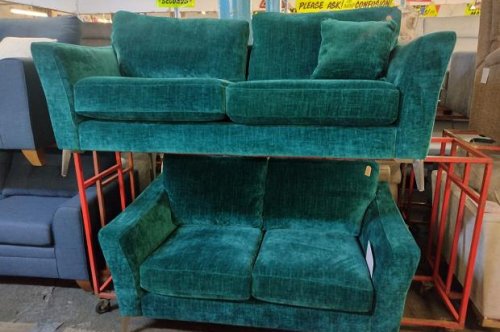
That matters even more with ex-display and clearance furniture. A piece may be lovely, barely used and priced sensibly, yet still be awkward to describe if it has been in a showroom, a staging project or storage. Be honest about its history. “Clearance” isn’t a magic word that turns a mark into character.
Pick the selling route that matches the furniture
For ordinary household pieces, a local marketplace or a general online marketplace is usually the least complicated route. You control the photographs, the description and the price. Buyers can message you, and collection can be arranged without wrapping a six-foot sideboard in bubble wrap and hoping for the best.
The catch is time. You’ll answer the same questions more than once, and some people will ask whether you’ll take half the asking price before they’ve even seen the item. That’s the trade-off for keeping control and avoiding a commission.
A dealer can be useful for a good-quality, easy-to-resell piece, especially if you need the room cleared quickly. Expect the offer to reflect their time, storage, transport and risk. That isn’t an insult to your furniture. It’s simply how a dealer makes the numbers work. Ask whether the offer is for collection, whether payment is immediate and what happens if the piece isn’t accepted after inspection.
An auction can suit unusual, antique or desirable furniture, but the estimate is not a promise. There may be seller’s fees, collection charges, a reserve or a delay before you’re paid. Read the auction house’s selling terms before handing over the wardrobe. If you’re using an auction-style online listing yourself, be equally clear about the closing time, collection arrangements and what happens if a winning bidder disappears.
Charity is the kind option when the furniture is sound but the effort of selling it has become a bigger nuisance than the money you’d make. Check the charity’s collection rules first. They may refuse upholstered items without the right fire-safety information, furniture with damage or anything they can’t safely carry.
Take photographs buyers can actually use
Start with one bright, wide photograph showing the whole piece. Then take the front, both sides, the back, the top and the inside. Open drawers and doors. Show the feet. If it’s a dining table, show the leaves, fixings and underside. If it’s a bed, show the slats, centre support and any storage mechanism.
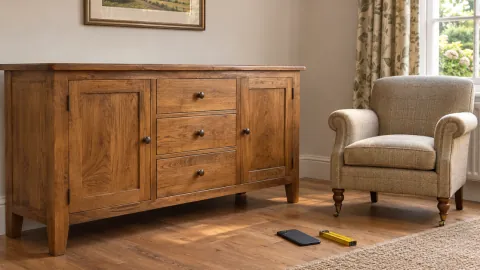
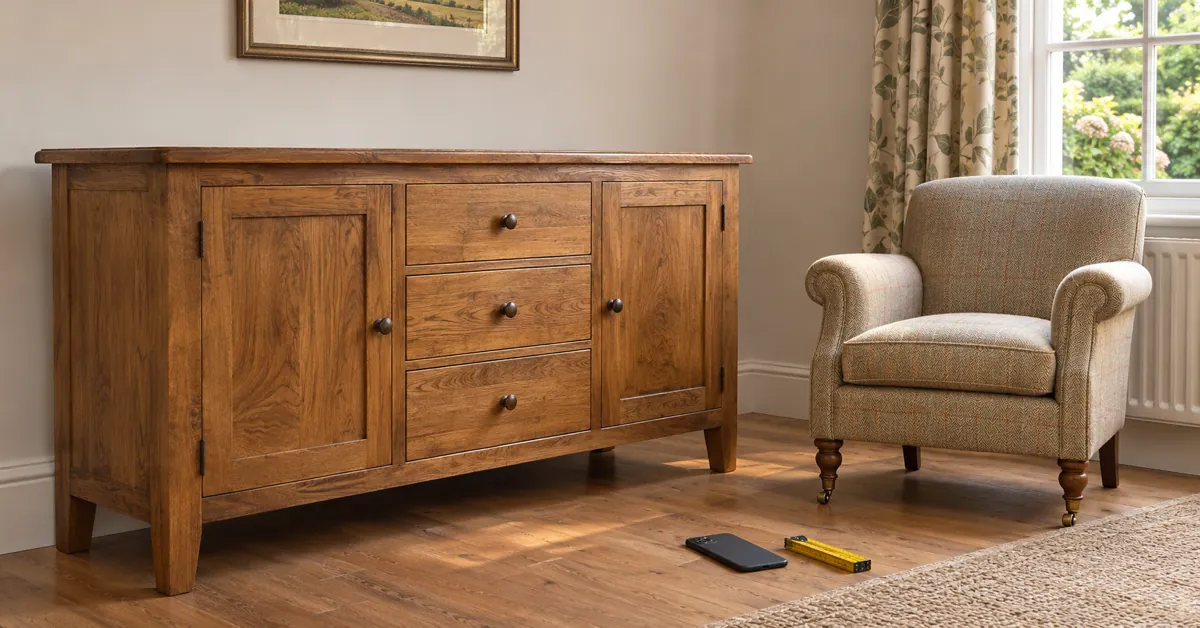
Photograph the faults close up, in daylight, with something familiar beside them for scale. A ruler is useful. So is a note saying “chip on rear right corner”, provided the note doesn’t cover the chip. Buyers don’t expect showroom perfection from used furniture. They do expect to know what they’re agreeing to.
Clean it before photographing it, but don’t disguise it. A quick dust and a gentle wipe can help a wooden surface speak for itself. I wouldn’t drape a throw over a tired chair or crop out a water mark. That only postpones the awkward conversation until collection, when everybody has less patience.
Keep the background calm. Remove family photographs, post, keys and anything that reveals more about your home than a stranger needs to know. You want the furniture to be the subject, not your address by accident.
Measure twice, because the buyer will
Give the overall width, height and depth in centimetres. Add the clearance needed to open doors, drawers or a recliner. For a sofa, include the full width, arm width, seat height and the narrowest removable section if it comes apart. For a wardrobe, measure the largest panels and say if it dismantles.
Then measure the route out. Doorways, stair turns, lifts, hallways and the gap between the kerb and the front door all count. A buyer can own a tape measure too, but your listing should give them enough information to decide if a viewing is worth the trip.
Say how heavy the piece feels to move and how many people you think it needs. Don’t present that as an engineering certificate. It’s practical warning. A large mirror, marble top or solid oak cabinet can be a very different job from a flat-pack unit that happens to look similar online.
Write the history, not a sales fairy tale
Use a plain title: “Painted pine dresser, 120cm wide, collection from Leeds” tells a buyer much more than “stunning shabby chic bargain”. Include the maker or range only if you can support it. If you don’t know the wood, say “wooden” rather than guessing oak, walnut or reclaimed timber from the colour.
Explain whether it was bought new, used at home, displayed in a showroom, used for staging, returned, repaired or stored. If you’re selling on behalf of a business, say so. If you’re a private seller clearing your own home, say that too. A buyer deserves to understand who is selling and what they’re buying.
“Ex-display” is useful when it’s true, but it doesn’t tell the whole story. Was it assembled? Were drawers opened repeatedly? Has it been moved? Are there missing brackets, spare shelves or instructions? If a clearance item has a cosmetic mark that was pointed out before sale, include it in your own listing rather than relying on a buyer to notice from a photograph.
Pricing without pretending the internet is an oracle
Look at comparable pieces with similar age, condition, size and collection arrangements. Ignore the highest dream price and the lowest desperate one. A dealer’s retail ticket is not the same as a private sale, and an old listing that never sold isn’t evidence of value.
Set a price that leaves room for a sensible conversation if you want one. If you’re firm, say so politely. If you’ll consider offers, decide beforehand how low you’re prepared to go. “Offers around £X” is clearer than making every buyer guess whether you mean £20 less or half the price.
Don’t invent a saving by comparing your used furniture with a completely different new product. A real bargain can stand on accurate measurements and a fair condition report. It doesn’t need fireworks.
Upholstered furniture needs extra care
Before listing a sofa, armchair, divan, bed base, mattress, padded headboard or cushion, look for the permanent fire-safety label. The Furniture and Furnishings (Fire) (Safety) Regulations 1988 cover a range of domestic upholstered furniture, and the rules include second-hand furniture. GOV.UK’s guidance says second-hand supply still requires a permanent label. The 2025 amendment changed the labelling provisions, so don’t copy an old internet checklist and assume it still tells the whole story.
The legislation says second-hand furniture within the rules must meet the relevant requirements for upholstery, fillings and permanent covers. It also prohibits supplying furniture that doesn’t satisfy the requirements, subject to the stated exceptions. That is why I’d photograph the label and include the exact wording in the listing.
If the label is missing, torn or unreadable, don’t blithely write “fire safe”. Ask the manufacturer, an upholsterer or your local Trading Standards service what evidence is acceptable for that particular item. If you can’t establish compliance, say that clearly and consider not selling it. A charity may decline it for the same reason.
Be especially careful with furniture made before 1950, re-covered pieces and anything with foam or unusual filling. The 1988 Regulations contain exclusions and detailed requirements. “It’s only an old chair” isn’t a legal category, sadly.
Private seller does not mean anything goes
If you’re selling your own furniture privately, the buyer doesn’t get the same consumer protections as they would from a trader. But your description still matters. Under the Sale of Goods Act 1979, a private sale includes a term that the seller has the right to sell the goods, and goods sold by description must correspond with that description. So don’t call a pine table oak, say a cupboard has all its shelves when it hasn’t, or hide a repair behind a carefully chosen photograph.
Don’t describe yourself as a private seller if you’re regularly buying furniture to resell. The legal position can depend on acting in the course of a business, not simply on which box you tick on a marketplace. If you sell often, get proper advice before you assume private-seller rules cover you.
Keep messages, the final description and photographs until the transaction is finished. Put agreed defects, dimensions, price, collection time and what is included in writing. If a buyer asks a direct question, answer that question directly rather than hoping the small print will rescue a vague listing.
Collection should be boring and safe
Arrange collection in daylight where possible. Keep your address private until the buyer has committed to a time, and don’t invite a stream of strangers into your home without thinking about it. Have another adult present if that makes you more comfortable. For a very heavy item, agree in advance who is responsible for carrying it and what happens if the buyer arrives alone.
Don’t let a buyer dismantle a fitted unit with the wrong tools or remove a door without agreeing it. For ex-display or clearance furniture, photograph the item again before it leaves, especially if it has detachable legs, shelves or panels.
For payment, follow the platform’s rules and don’t hand over the furniture until payment has genuinely cleared. Screenshots of transfers can be faked. If you’re accepting cash, count it somewhere safe. If a courier is collecting, record the handover and keep the collection details.
If it doesn’t sell
Change the first photograph, tighten the title and add the measurements before cutting the price. Buyers often skip a listing because they can’t tell if it will fit, not because the furniture is hopeless.
Try a dealer or auction route for a piece that needs a specialist audience. Donate only when the furniture is safe and honestly described. If it’s damaged, damp, infested or missing the information needed for upholstered furniture, don’t pass the problem to a charity or a buyer who has less time to inspect it than you did.
The best listing is a small act of respect. Show the back, name the mark and measure the awkward bit. Someone can then decide with their eyes open, which is exactly how a clearance bargain should work.